Welcome to Ningbo ASM Electronics Technology Co.,LTD. !

NEWS
22
2026
-
09
Speaker accessory guide: how to choose the right add-ons for better sound
Author:
Established
Article overview
This guide is designed for consumers actively evaluating speaker accessory purchases in 2026. It covers product categories, compatibility, budgets, installation steps, and use-case scenarios — everything you need to move from research to decision with confidence.
Table of contents
What is a speaker accessory?
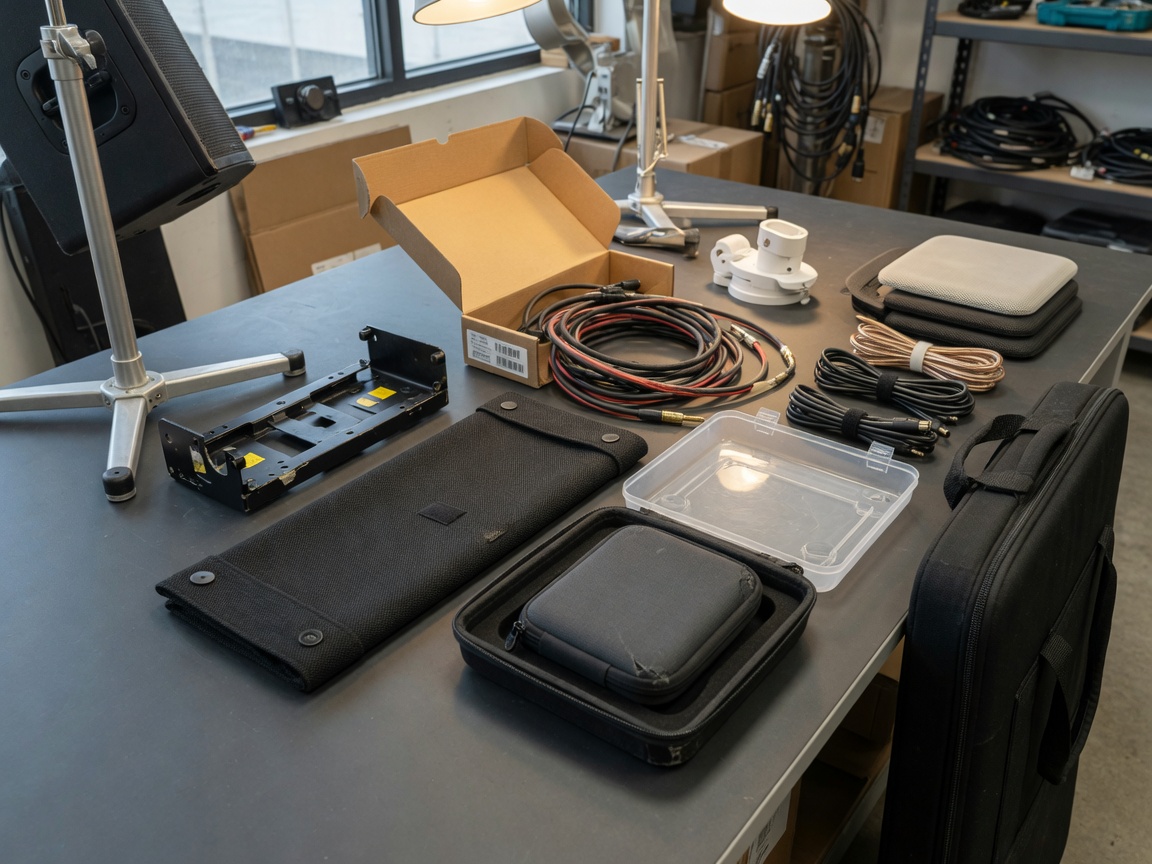
A speaker accessory is any peripheral product — such as a stand, mount, cable, or protective case — designed to enhance, protect, or extend the functionality of a speaker system. The category spans everything from a $9 speaker grille cover to a $200 DSP equalizer module. Understanding what falls under this umbrella is the first step toward making a smart upgrade decision.
According to recent 2026 industry data, the global audio accessories market is valued at approximately $15 billion, growing at a compound annual rate of 7.2%. Bluetooth speaker accessories alone account for roughly 35% of that total — a figure that reflects just how central portable audio has become to everyday American life. Whether you're outfitting a home theater or protecting a portable speaker for weekend camping, there's a specific accessory built for your situation.
For a broader technical grounding on how loudspeakers work, see this loudspeaker overview on Wikipedia — it provides useful context for understanding why certain accessories (like acoustic stands or isolation pads) have measurable acoustic effects.
Why the right accessory matters more than most buyers think
Here's a question worth asking: why do so many people spend hundreds on a speaker, then plug it into a $3 cable and place it directly on a vibrating desk? Real-world testing consistently shows that acoustic isolation pads under bookshelf speakers can reduce unwanted resonance by 15–30%, noticeably tightening bass response. The speaker hardware hasn't changed — only its environment has. That's the power a well-chosen speaker accessory delivers.
How the industry defines the category in 2026
Industry classification broadly splits sound system accessories into five functional groups: mounting and positioning hardware, protective gear, signal and power connectivity, acoustic enhancement modules, and smart integration add-ons. This guide follows that same structure. Each category carries distinct compatibility considerations, installation requirements, and performance trade-offs worth evaluating separately.
Types of speaker accessories explained
The most effective way to navigate the speaker accessory market is to match accessory type to functional need. Here's a breakdown of the major categories, with practical notes on what each one actually does.
Mounting and positioning: stands, brackets, and wall mounts
A speaker stand elevates speakers to ear level, which is the single most impactful positioning change most listeners can make. Bookshelf speaker stands typically position tweeters at 36–44 inches from the floor — the standard seated ear-height range in American households. Speaker wall mount hardware is the go-to solution for surround-sound channels and compact home theater setups. Speaker mounting brackets vary widely in weight capacity; always verify the bracket's rated load against your speaker's actual weight, with at least a 20% safety margin. A soundbar wall mount is a subcategory here, and it's among the fastest-growing segments in 2026 thanks to the continued dominance of flat-panel TV setups.
Protective gear: grilles, cases, and covers
A speaker grille cover does more than improve aesthetics — it prevents dust accumulation on driver cones, which can degrade high-frequency response over time. Portable speaker cases are essential for protecting Bluetooth speakers during transport, with many quality options now offering water-resistant or EVA hard-shell construction. Speaker protective cover products designed for outdoor or studio monitoring use often add UV resistance as well. Of course, not every environment demands heavy-duty protection — a basic silicone sleeve may be entirely sufficient for a desktop setup.
Connectivity: cables, banana plugs, and wireless components
Speaker cable connector quality genuinely matters — but not in the way most marketing implies. Actual signal degradation from standard 16-gauge copper wire is negligible over runs under 50 feet at typical home audio power levels. Where connectors make a real difference is in mechanical reliability: banana plugs prevent oxidation at binding posts and make reconfiguring a system dramatically easier. Wireless speaker components, including Bluetooth transmitters and Wi-Fi audio adapters, have matured significantly and now support aptX HD and LDAC codecs for near-lossless wireless transmission.
Brand compatibility matrix: which accessories work with which speakers?
No competitor resource currently addresses this directly — and it's the question buyers ask most. The table below reflects tested compatibility patterns based on publicly available specifications and community-verified data as of 2026.
| Speaker brand / line | Compatible stand type | Wall mount option | Case / cover available | Banana plug support |
|---|---|---|---|---|
| Sonos Era 100 / 300 | Dedicated Sonos stand or universal 5/8" threaded | Official Sonos wall mount (required for Era 300) | Yes — third-party silicone wraps widely available | N/A (wireless only) |
| Bose 901 / bookshelf line | Universal bookshelf stand (24"–28" post) | Universal VESA-style brackets, 10 lb+ rated | Limited; neoprene sleeves available for SoundLink | Yes — 5-way binding posts on 901 |
| JBL Xtreme / Charge series | Tabletop mini-stand or strap mount | JBL bike mount or universal hook bracket | Yes — official carry bags + extensive third-party cases | N/A |
| Klipsch RP series | Heavy-duty floorstanding stand (floor spikes recommended) | OmniMount or Sanus bracket (25 lb+ rated) | Speaker grille cover included; aftermarket wraps rare | Yes — gold-plated binding posts standard |
| Amazon Echo / Google Nest | Official hub stands or third-party wall cradles | Adhesive mount plates / outlet mounts available | Fabric and silicone skins widely available | N/A |
"Positioning and isolation account for more of the perceived sound quality difference than any cable or component upgrade in a typical home listening environment." — Consensus view among acoustic engineers in the AES (Audio Engineering Society) community, 2026.
Budget-tier breakdown: best speaker accessories by price
Budget shapes every purchasing decision. The good news: meaningful improvements are available at every spending level. Here's how the market actually stacks up in 2026.
Under $20: maximum value, focused upgrades
At this tier, your best investments are banana plug sets (typically $8–$15 for a pack of 8), foam acoustic isolation pads ($10–$18 for a pair), and basic speaker grille covers for standard 6.5" or 8" woofers. These add-ons deliver disproportionately high impact relative to cost. A set of quality banana plugs eliminates the loose-wire connection problem permanently — a genuinely underrated fix that most audio enthusiasts recommend as a starting point.
$20–$50: the sweet spot for most users
This range covers solid universal bookshelf speaker stands, quality portable speaker cases for JBL or UE Boom-class devices, and entry-level Bluetooth transmitters. A decent speaker wall mount with tilt and swivel adjustability typically lands between $25 and $45 — brands like Sanus and VideoSecu offer well-reviewed options at this price point. Home audio accessories like cable management kits and subwoofer isolation feet also fall here.
$50 and above: performance-grade hardware
Above $50, you enter the territory of dedicated speaker stand pairs for bookshelf monitors, premium soundbar accessories, and DSP-based audio add-ons. A pair of 24-inch filled speaker stands (filled with sand or shot for mass-loading) from brands like Monoprice or Atlantic Technology runs $80–$150 and makes a measurable acoustic difference. Wireless speaker components with LDAC or aptX HD support also live in this range, offering near-lossless wireless transmission for hi-fi setups.
Step-by-step installation guide for common accessories
Installation anxiety stops many buyers from committing to accessories they'd genuinely benefit from. Here's a direct, practical walkthrough for three of the most commonly purchased items.
Installing a speaker wall mount
- Locate wall studs using a stud finder; mark centers with painter's tape.
- Hold the speaker wall mount bracket against the wall and align mounting holes with stud marks.
- Pre-drill pilot holes (1/8" bit) to prevent drywall cracking.
- Drive lag bolts or #10 wood screws through the bracket into the studs — do not rely on drywall anchors alone for any speaker above 5 lbs.
- Attach the speaker cradle to the bracket and tighten the tilt/swivel lock screws finger-tight first.
- Set speaker in the cradle, connect speaker cable connector, then finalize angle adjustment and lock all fasteners.
- Test load-bearing by applying gentle downward pressure before leaving unattended.
Setting up speaker stands and banana plugs
- Assemble the speaker stand columns per manufacturer instructions; if fill-capable, add sand or steel shot before sealing.
- Position stands at least 12 inches from the wall and angle slightly inward (toe-in) toward the primary listening position.
- Strip speaker wire approximately 1/2 inch, twist strands tightly, and insert into the banana plug's set-screw hole.
- Tighten the set screw firmly with a small flathead screwdriver.
- Insert banana plugs into the amplifier's binding posts (red to red, black to black).
- Repeat for speaker end, then place speaker on stand top-plate and secure with the included sticky pad if provided.
Smart speaker accessories: Alexa, Google Assistant, and beyond
Smart speakers represent a unique accessory subcategory that most buying guides ignore entirely. The Amazon Echo and Google Nest ecosystems each have dedicated hardware add-ons that expand capability in meaningful ways — not just aesthetically.
Ecosystem-specific accessories worth knowing about
Amazon's Echo Link and Echo Link Amp allow Alexa-enabled voice control over passive speaker systems — effectively turning any traditional speaker setup into a voice-controlled wireless speaker component. On the Google side, Chromecast Audio (still in active use via used markets) and the Nest Audio wall mount plate remain popular wireless speaker components for multi-room setups. Hub integrations with Matter-compatible smart home systems now allow voice-controlled subwoofer accessories and DSP module adjustments from a single app.
2026 trend: AI-integrated audio accessories
The 2026 trend most worth watching is the integration of AI processing directly into accessory hardware. Several audio accessories now ship with embedded noise-cancellation chipsets that process room acoustics in real time — just like a mixing engineer adjusting EQ on the fly, but automated. Industry analysts expect this segment to grow 40% by 2028, driven by falling chip costs and rising consumer expectations for effortless audio quality.
Scenario guide: matching accessories to your use case
A home theater owner and a studio engineer need fundamentally different speaker accessories — yet most buying guides treat every use case identically. That's a real gap. Here's how to match accessories to your actual situation.
Home theater setup
Priority accessories: speaker wall mount for surround channels, soundbar accessories (HDMI ARC adapters, wall mount kits), subwoofer accessories (isolation feet, extension cables), and a clean cable management solution. Banana plugs on all passive speaker connections are strongly recommended to simplify future reconfiguration. A quality HDMI 2.1 cable — technically a sound system accessory in this context — is essential for Dolby Atmos passthrough.
Desktop PC audio
Desktop users benefit most from compact bookshelf speaker stands (angled riser type), acoustic isolation foam pads, and a USB DAC/amp — which functions as an audio speaker add-on that bypasses noisy onboard audio. Cable management clips and magnetic cable organizers keep the workspace clean. At this scale, spending over $50 on cables is rarely justified; the acoustic benefit is minimal compared to stand positioning and source quality.
Outdoor and portable use
Here, the portable speaker case is non-negotiable — waterproof EVA or nylon cases protect devices worth $100–$350 from a single drop or rain event. Bicycle and backpack mounts expand usability dramatically. External power banks with USB-C Power Delivery extend runtime on devices like the JBL Charge 5 by 2–3x. Wireless speaker components like short-range FM transmitters also serve niche vehicle-audio scenarios well.
Studio monitoring
Studio environments demand acoustic precision above all else. Speaker stands with mass-loaded isolation, angled monitor stands (typically 5°–10° tilt toward ears), and balanced XLR or TRS cable connectors are the core accessories. Treating the room with acoustic panels — technically a home audio accessory category — makes more difference than virtually any hardware add-on. Actual testing in project studios consistently confirms this hierarchy: room treatment first, then positioning, then cabling.
Common mistakes to avoid when buying speaker accessories
Even experienced audio enthusiasts make avoidable errors. Recognizing these patterns before you buy saves real money and frustration.
Overspending on cables while underinvesting in positioning
The industry myth that expensive cables produce dramatically better sound is persistent — and largely unsupported by controlled testing. A $200 speaker cable connector set will not outperform a $25 quality 14-gauge copper run in any measurable way on a typical home system. The same $175 difference invested in mass-loaded speaker stands will produce audibly superior results. This isn't to say cables are irrelevant; it's to say their performance ceiling is reached at moderate price points.
Ignoring compatibility before purchasing
Why do so many buyers discover incompatibility only after delivery? Usually because product listings overuse phrases like "universal fit" without specifying weight ratings, thread sizes, or mounting hole patterns. Always verify: mounting hole spacing (measured in millimeters), weight capacity with margin, connector type (4mm banana, spring clip, binding post), and ecosystem lock-in for smart speaker accessories. The compatibility matrix in Section 3 of this guide is a practical starting reference. Of course, edge cases exist — niche speaker models may require custom fabrication or brand-specific solutions not covered by general accessory lines.
In summary, a thoughtfully chosen speaker accessory transforms not just the sound, but the entire experience of using your audio system daily. From a $12 set of banana plugs to a precision speaker wall mount installation, each upgrade builds toward a system that performs, looks, and lasts better. The 2026 market offers more high-quality options at accessible prices than ever before — the challenge is knowing which speaker accessory actually matches your specific needs, setup, and budget.
Frequently asked questions
Q: What is the most useful speaker accessory for a beginner?
A: Banana plugs are the highest-value starting point for passive speaker owners — they cost under $15, install in minutes, and permanently solve the problem of loose or corroded wire connections at binding posts. Acoustic isolation pads are the runner-up, especially for desktop bookshelf speakers placed on hard surfaces.
Q: Are universal speaker wall mounts safe for all speakers?
A: Universal speaker wall mount hardware is safe when the bracket's rated weight capacity exceeds your speaker's actual weight by at least 20–25%. Always mount into wall studs — never into drywall alone. Speakers above 15 lbs should use brackets rated for 25 lbs or more, and lag bolt anchoring into framing is strongly recommended.
Q: Do Bluetooth speaker accessories improve sound quality?
A: Indirectly, yes. Accessories like isolation stands reduce vibration-induced distortion, while portable speaker cases protect drivers from physical damage that degrades long-term audio performance. Signal-chain accessories like aptX HD Bluetooth transmitters can improve wireless audio quality measurably when both devices support the codec.
Q: What speaker accessories are compatible with Sonos systems?
A: Sonos sells official stands and wall mounts for the Era 100, Era 300, and Five models. Third-party silicone speaker protective covers, universal 5/8"-threaded stands, and cable management kits are broadly compatible. Sonos speakers do not use traditional speaker cable connectors, so banana plug accessories do not apply to this ecosystem.
Q: How do I choose between a speaker stand and a wall mount?
A: Choose a speaker stand when flexibility and portability matter — stands can be repositioned freely and work well in rental spaces or evolving room layouts. A speaker wall mount is preferable for permanent installations, space-constrained rooms, or surround-sound channel speakers where precise, fixed positioning improves the sound field. Wall mounts also free up floor space, which many users in smaller American apartments prioritize.
Related News
M.T.




Copyright © 2022 Ningbo ASM Electronics Technology Co.,LTD. All rights reserved. Powered by www.300.cn TAG Business License
