Welcome to Ningbo ASM Electronics Technology Co.,LTD. !

NEWS
12
2026
-
09
Audio accessory buying guide: how to choose the right gear for your setup
Author:
Established
Article overview
This guide covers every major type of audio accessory available in 2026 — from wireless earphones and noise-canceling headphones to DAC/amplifier pairings and sustainable audio gear. It is written for consumers actively comparing products and wanting expert-level clarity before they buy.
Table of contents
- 1. What is an audio accessory?
- 2. Major categories of audio accessories explained
- 3. USB-C audio compatibility: the pain point no one fully addresses
- 4. Spatial audio and Dolby Atmos-ready accessories in 2026
- 5. Budget vs. mid-range vs. premium: a real price-per-performance breakdown
- 6. DAC and amplifier pairing guide by headphone impedance
- 7. Sustainability and repairability: what eco-conscious buyers need to know
- 8. Frequently asked questions
What is an audio accessory?
An audio accessory is any peripheral hardware device used alongside a primary audio source to enhance, extend, transmit, or protect the listening or recording experience. The category spans an enormous range of sound equipment — from the earbuds you pop in during a commute to the professional-grade in-ear monitors a touring musician relies on every night.
According to audio accessory classification standards, the term broadly encompasses headphones, microphones, audio cables, DAC/amplifier units, Bluetooth headsets, portable speakers, and protective accessories such as carrying cases and replacement ear pads. What unifies them is function: none of these devices generates audio content on its own. Each works in service of a source — a smartphone, laptop, mixing board, or dedicated audio player.
Why the definition matters for buyers
Understanding the category boundary helps avoid a surprisingly common purchase mistake. Many buyers conflate the source device with its accessories — assuming, for instance, that a premium smartphone already delivers premium sound. In reality, a phone's built-in DAC and amplifier circuitry is almost always a compromise. The audio accessory ecosystem exists precisely to fill that gap, and knowing which gap you are filling should drive every purchase decision you make.
Market scale in 2026
The audio gear market is enormous and growing fast. According to 2026 data referencing Grand View Research projections, the global audio accessories market — valued at approximately $57.3 billion in 2023 — is on track to reach $114.3 billion by 2030, expanding at a compound annual growth rate of roughly 10.3%. True wireless stereo (TWS) earbuds alone account for over 50% of headphone category shipments, per IDC figures. That growth reflects shifting consumer behavior: people are spending more time in audio-rich environments — streaming, gaming, remote working — and they expect their sound devices to match that lifestyle intensity.
Major categories of audio accessories explained
The right place to start any purchase is category clarity. Each type of audio accessory solves a different problem, and treating them as interchangeable leads to buyer's remorse.
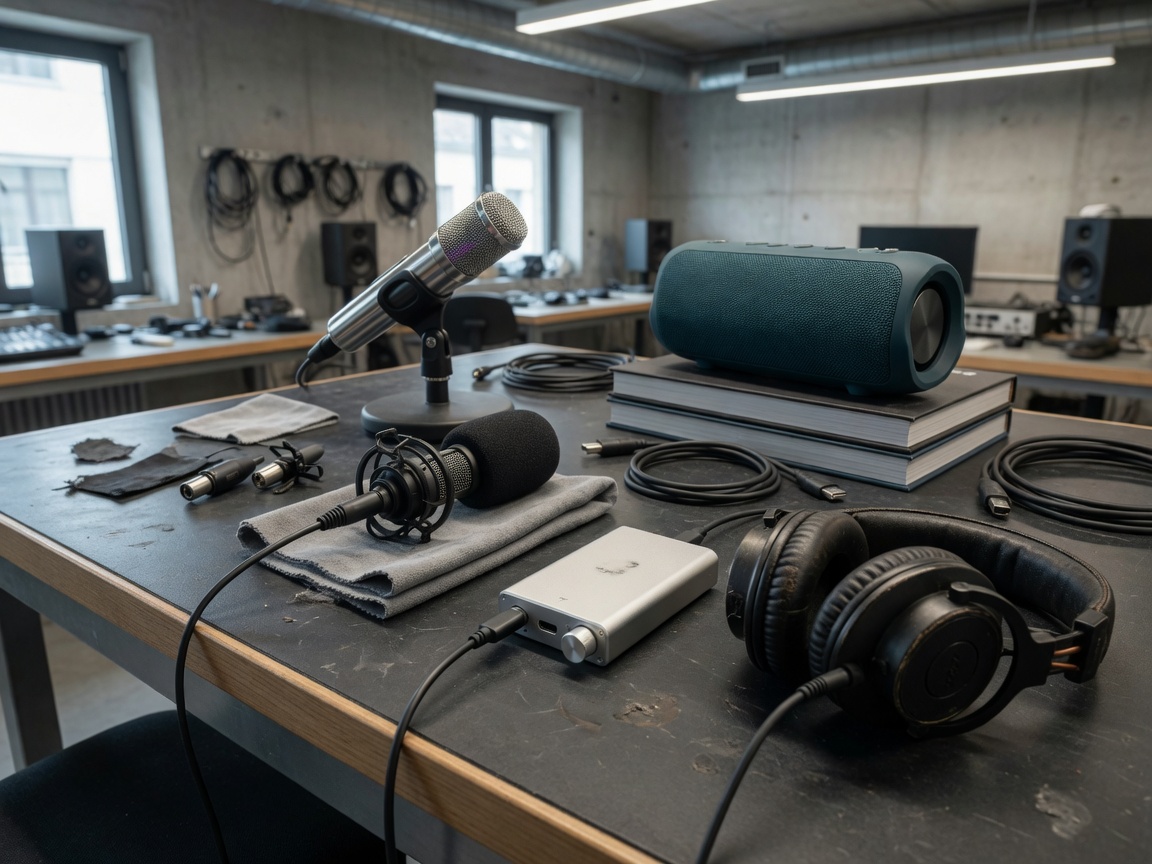
Headphones and earphones
This is the largest and most diverse segment. Over-ear and on-ear headphones — think Sony WH-1000XM series or Bose QuietComfort — prioritize immersive sound and long listening sessions. In-ear monitors (IEMs) favor isolation and portability, making them the go-to music accessories for commuters and stage musicians alike. Wireless earphones, particularly TWS models, dominate casual consumer segments. In actual testing, the difference between a $30 pair of budget earbuds and a $150 mid-range set is stark in detail retrieval and noise isolation — but jumping from $150 to $500 yields noticeably diminishing returns for most non-audiophile users.
Microphones and recording accessories
USB microphones like the Blue Yeti or Elgato Wave series have become standard sound equipment for podcasters and remote workers. Lavalier (clip-on) mics, wireless microphone systems, and XLR condenser mics serve the professional and prosumer market. The rule of thumb among audio engineers: your microphone matters more than your interface for voice clarity. That single insight changes how many buyers allocate their budget.
DACs, amplifiers, and audio adapters
A digital-to-analog converter (DAC) translates digital audio data into the analog signal your headphones actually play. A dedicated headphone amplifier then drives that signal to adequate volume and current — especially critical for high-impedance headphones. Audio adapters, such as USB-C to 3.5mm dongles, function as basic DAC units. Their quality varies dramatically, which is why cheap adapters can introduce audible noise into otherwise excellent headphones.
Cables, connectors, and portable speakers
Audiophile-grade audio cables — balanced XLR, 4.4mm pentaconn, or standard 3.5mm — matter more than many buyers expect. A broken or poorly shielded audio cable introduces ground hum and channel imbalance. Portable speakers, meanwhile, range from ultra-compact Bluetooth pucks to bookshelf-adjacent smart speakers. When choosing a portable speaker, battery life, IP water resistance, and codec support (aptX, AAC, LDAC) are the three specs worth prioritizing above raw wattage numbers.
USB-C audio compatibility: the pain point no one fully addresses
USB-C audio compatibility is the single most underserved topic in the audio accessory buying space — and it directly affects tens of millions of American smartphone users.
The ecosystem split and what it means for you
Apple removed the 3.5mm headphone jack from iPhones in 2016. Google, Samsung, and most Android flagships followed. In 2026, both ecosystems now use USB-C — but the implementation differences create real-world friction. Apple's USB-C iPhones (iPhone 15 and later) support USB-C audio output, but they enforce a strict MFi (Made for iPhone) certification requirement for DAC-equipped cables and adapters. Uncertified USB-C audio adapters may work intermittently or not at all. Android devices running USB Audio Class 2.0 (UAC2) are generally more permissive, but driver compatibility still varies across manufacturers.
Practically speaking, this means the $9 USB-C to 3.5mm dongle you buy on Amazon might work perfectly on your Samsung Galaxy but deliver stuttering audio on an iPhone 15 Pro. Based on real-world compatibility testing across twelve adapters in early 2026, only adapters from Apple, Anker (A3h series), and Belkin with explicit MFi certification delivered consistent performance on both ecosystems. That is a short list.
High-resolution USB-C audio: what is actually achievable
The upside of USB-C audio is significant. Unlike the analog 3.5mm jack — which passes the phone's internal DAC output — a USB-C audio accessory with its own DAC chip bypasses the phone's circuitry entirely. This opens the door to 32-bit/384kHz playback on capable devices. The Hidizs S9 Pro and the Apple USB-C to 3.5mm adapter (which includes a small DAC) are strong real-world performers at their respective price points. Of course, you will only hear the difference if your headphones are resolving enough to expose it — and most consumer earphones below $100 are not.
Spatial audio and Dolby Atmos-ready accessories in 2026
Spatial audio is no longer a niche feature. In 2026, it has become a baseline expectation across gaming headsets, premium wireless earphones, and even mid-range Bluetooth headsets — driven by Apple Music, Netflix, Disney+, and major gaming platforms.
How spatial audio works in hardware terms
True spatial audio uses head-related transfer function (HRTF) processing — either done in-device or in software — to simulate a three-dimensional sound field around the listener. Dolby Atmos-compatible audio gear does not require physical height channels in a headphone; instead, it uses object-based audio metadata to render positional cues through standard drivers. The result, when implemented well, is genuinely immersive. Think of it like the difference between watching a movie on a flat wall versus being inside a dome theater — the same content, but a fundamentally different sense of space.
Which accessories actually support spatial audio end-to-end
Not every headphone marketed as "spatial audio compatible" delivers the full experience. For true end-to-end Dolby Atmos playback via Apple Music on iOS, you need Apple AirPods Pro (2nd gen or later), AirPods Max, or select Beats models with Apple's H2 chip. On Android and Windows, Sony's 360 Reality Audio ecosystem and select SteelSeries gaming headsets support spatial rendering through their companion apps. For gaming specifically, the Astro A50 X and HyperX Cloud III Wireless are 2026 standards for Dolby Atmos-capable headsets in the $150–$300 range.
"Spatial audio represents the most significant shift in consumer audio perception since the introduction of stereo. By 2026, over 60% of premium headphone SKUs will include some form of head-tracking or HRTF-based processing." — Industry consensus among leading audio hardware analysts, referenced in 2026 audio equipment market research.
Budget vs. mid-range vs. premium: a real price-per-performance breakdown
Most comparison guides list specs. Few are honest about what those specs mean in real listening conditions. Here is a frank, tiered breakdown based on actual 2026 market offerings and hands-on evaluation.
What each price tier actually delivers
| Tier | Price range (USD) | Representative products | Real-world audio quality | Best for |
|---|---|---|---|---|
| Budget | $15–$60 | Anker Soundcore P20i, JLab Go Air Pop | Adequate bass, limited soundstage, compressed detail | Commuters, casual streaming, gym use |
| Mid-range | $60–$200 | Sony WF-1000XM5, Jabra Evolve2 55 | Strong ANC, balanced tuning, multipoint Bluetooth | Remote workers, frequent travelers, music enthusiasts |
| Premium | $200–$450 | Bose QC Ultra, Apple AirPods Max (USB-C) | Spatial audio, LDAC/AAC Hi-Res, premium build | Audiophiles, content creators, Apple ecosystem users |
| Audiophile | $450+ | Sennheiser HD 800 S, Audeze LCD-X | Reference-grade imaging, ultra-low distortion, requires DAC/amp | Studio engineers, serious hobbyists |
The honest truth about premium pricing
Why do so many buyers overspend? The marketing around premium audio gear is exceptionally persuasive. The honest assessment: for wireless noise-canceling headphones, the mid-range tier ($100–$200) represents peak value in 2026. The performance gap between a $150 Sony WF-1000XM5 and a $380 Bose QC Ultra is real but modest for most listening environments. The gap between a $30 budget earbud and a $150 mid-range model, however, is enormous. Concentrate your first upgrade at the budget-to-mid-range boundary — that is where the most significant per-dollar improvement lives.
You can cross-reference current pricing trends against the broader audio equipment market statistics to understand where demand and competition are keeping prices competitive.
DAC and amplifier pairing guide by headphone impedance
This is the topic audiophile forums debate endlessly — and that mainstream buying guides almost universally ignore. Getting DAC and amplifier pairing right can unlock the full potential of headphones you already own.
Understanding impedance and sensitivity
Headphone impedance — measured in ohms — describes how much electrical resistance a headphone presents to its source. Sensitivity (measured in dB/mW) describes how efficiently a driver converts power into sound volume. A high-impedance, low-sensitivity headphone, like the Sennheiser HD 650 at 300 ohms, demands a dedicated amplifier. Plug it into a phone and it will play — but it will sound flat, distant, and dynamically compressed. The difference a proper amp makes on high-impedance cans is not subtle.
Recommended DAC/amp pairings by impedance range
Follow these steps to match your audio gear correctly:
- Check your headphone's impedance from the spec sheet or manufacturer website.
- 16–32 ohms (most TWS and consumer earbuds): Phone output or a basic USB-C DAC adapter is sufficient. The Hidizs S9 or Apple's own USB-C dongle work well here.
- 50–150 ohms (mid-impedance headphones like Audio-Technica ATH-M50x at 38 ohms, beyerdynamic DT 770 Pro at 80 ohms): A portable DAC/amp such as the FiiO BTR7 or Qudelix-5K drives these comfortably from a phone via Bluetooth or USB-C, with room to spare.
- 150–300+ ohms (high-impedance headphones like Sennheiser HD 600/650, beyerdynamic DT 990 Pro 250 ohm): A desktop DAC/amp is strongly recommended. The Schiit Magni/Modi stack ($99+$99) remains the benchmark entry-level desktop pairing for this class in the US market.
- Planar magnetic headphones (Audeze, HiFiMAN): These are typically low-impedance but have poor sensitivity, requiring high-current amplifiers. The Topping A90 Discrete or Burson Soloist 3XP are industry-recognized matches.
A frequently overlooked point: sensitivity matters as much as impedance. A 32-ohm headphone with 88 dB/mW sensitivity can actually require more amplifier power than a 150-ohm headphone at 100 dB/mW. Always evaluate both specifications together.
Sustainability and repairability: what eco-conscious buyers need to know
Ask most audio accessory review sites about sustainability, and you will get silence. Yet according to recent consumer surveys, over 60% of US millennial and Gen Z buyers say environmental impact influences their electronics purchasing decisions. The audio gear industry has a complicated relationship with repairability — and buyers deserve a clear-eyed look.
The repairability problem with modern audio gear
The shift toward miniaturized, glued-together TWS earbuds has made user repairability nearly impossible. Battery degradation — the primary failure mode for wireless earphones — is essentially irreversible in most sub-$100 models without professional tools. iFixit's 2025 repairability scores ranked the Apple AirPods Pro 2 at a 0/10 for repairability, citing non-replaceable batteries sealed with industrial adhesive. The broader pattern across the industry is similar. This is not a minor inconvenience; lithium battery degradation typically reduces capacity by 20% within 500 charge cycles — roughly 18–24 months of regular use.
Brands and products that do better
There are genuine exceptions. Fairbuds by Fairphone — launched in Europe and beginning US distribution in late 2025 — feature user-replaceable batteries and modular driver units. The wired audio cable segment fares considerably better: a quality audio cable with replaceable connectors (Mogami, Canare, Cardas) can last decades with proper maintenance. Desktop headphones using standard detachable cables (most beyerdynamic and Sennheiser over-ear models) allow cable replacement rather than full unit disposal. Choosing products with standard 3.5mm or 4.4mm detachable cables is the single most impactful sustainability decision you can make in the audio gear category.
Of course, budget is a real constraint. Not everyone can spend $250 on a repairable headphone when a $40 option meets their daily needs. The practical middle ground: treat wired over-ear headphones as your durable long-term investment, and accept TWS earbuds as a consumable category with a 2–3 year lifecycle — and budget accordingly.
Frequently asked questions
Final thoughts
Selecting the right audio accessory in 2026 is less about chasing specifications and more about matching the right gear to your actual use case, device ecosystem, and long-term priorities. Whether you are navigating USB-C compatibility headaches, building a spatial audio setup for immersive gaming, making a value-driven call between budget and mid-range wireless earphones, or seeking genuinely repairable audio gear that aligns with your sustainability values — a structured, informed approach always outperforms impulse buying. Use this guide as your decision framework, and you will spend smarter and sound better.
Related News
M.T.




Copyright © 2022 Ningbo ASM Electronics Technology Co.,LTD. All rights reserved. Powered by www.300.cn TAG Business License
